

When most people begin their fitness or health journey, they usually say, “I want to lose weight.” But what they often don’t realize is that weight loss and fat loss are not the same thing. And understanding this difference can completely transform the results you get—whether your goal is a slimmer waist, toned body, better energy, or improved metabolic health.

As a leading Dietician in Delhi Dietician Shreya Gupta Arora, I’ve seen countless clients focusing obsessively on the number on the weighing scale, often feeling discouraged even after making real progress. The truth is simple: the weighing scale does not show the whole picture.

Section 1: What Is Weight Loss?
Weight loss simply means a decrease in your overall body weight. This includes:
- Fat
- Muscle
- Water
- Glycogen (stored carbs)
- Even bone density in extreme cases
When you step on a weighing scale, it only shows a single number—not what the number consists of. That is why someone can lose weight quickly by:
- Crash dieting
- Fasting
- Dehydration
- Losing muscle mass
- Eating too little
But these are not signs of healthy progress.
Why weight loss happens quickly at first
When you start dieting, you cut calories, which leads to:
- Loss of water weight
- Reduced glycogen stores
- Possible muscle loss
This is why people lose 2–4 kg in the first week—but it isn’t fat.
Problems with focusing only on weight loss
- You may lose muscle, which slows your metabolism
- You may look smaller but not toned
- Weight may rebound when normal eating resumes
- Your strength and energy may drop
- You don’t improve body shape or fat distribution
In short, weight loss alone does not mean better health.
Section 2: What Is Fat Loss?
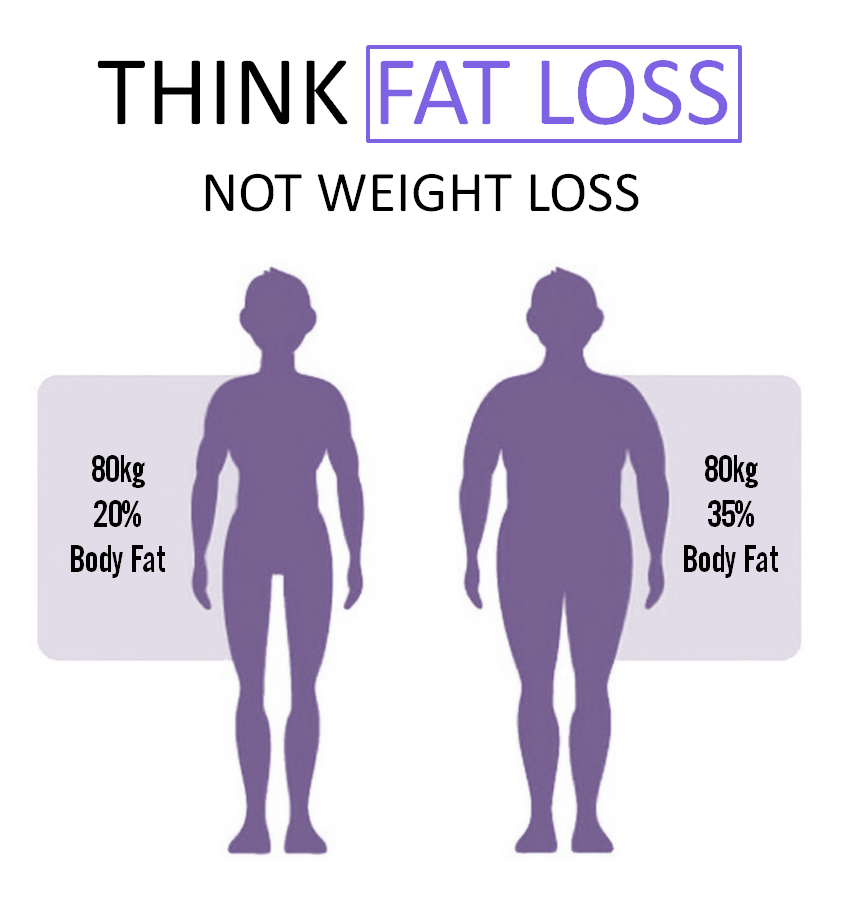
Fat loss is the process of reducing body fat percentage, not just body weight. This is the goal you should be chasing.
Fat loss is more meaningful because:
- It improves your body composition
- Your metabolism becomes healthier
- You gain muscle tone
- You look fitter and more sculpted
- You maintain your weight easily
- Hormones stay balanced
How fat loss looks on the body
People who lose fat:
- Have a smaller waist
- Notice inch loss
- Look more toned
- Feel lighter and energetic
- Fit better in clothes
Even if the scale doesn’t drop drastically, fat loss visibly improves your shape.
Why fat loss is slower than weight loss
Fat loss is a scientific process that involves:
- Using stored fat for energy
- Preserving or increasing muscle mass
- Improving insulin sensitivity
- Reducing inflammation
Because of this, fat loss is usually:
- 0.5 to 1 kg per week (healthy rate)
- Sustainable
- Permanent when done correctly
Section 3: Fat Loss vs Weight Loss – Key Differences
Below is a simple comparison table:
| Feature | Fat Loss | Weight Loss |
|---|---|---|
| What you lose | Fat only | Fat + muscle + water |
| Scale changes | Slow | Quick |
| Body shape | Gets toned | May look the same or saggy |
| Metabolism | Speeds up | Slows down |
| Long-term results | Sustainable | Weight rebounds |
| Health benefits | High | Low to moderate |
The conclusion: fat loss is the healthier and smarter option.
Section 4: Why Fat Loss Should Be Your Real Goal
Better metabolism
Muscle burns more calories than fat. When you preserve muscle, you burn more even at rest.
Hormonal balance
Losing fat improves insulin, cortisol, thyroid function, and reproductive hormones.
Disease prevention
Fat loss reduces the risk of:
- Diabetes
- PCOS
- Thyroid imbalance worsening
- High cholesterol
- High blood pressure
- Fatty liver
Body confidence
Inch loss and toning bring visible results that a scale cannot show.
Section 5: The Science Behind Fat Loss
To lose fat, your body must:
- Be in a calorie deficit
(Burn more calories than you eat) - Maintain protein intake
(Preserve muscle mass) - Perform strength training
(Increases lean muscle) - Improve metabolism
(Sleep, stress control, nutrient balance) - Reduce insulin spikes
(Balanced meals, high fiber, low sugar)
This is why fat loss takes time but delivers long-lasting results.
Section 6: Signs You Are Losing Fat Even if the Scale Doesn’t Move
Most people get discouraged when their weight doesn’t change—but fat loss gives these signs:
Clothes become loose
Your waistline shrinks.
You see muscle definition
Arms, thighs, back look firmer.
More energy
Fatigue reduces significantly.
Better digestion
Reduced bloating and acidity.
Face looks slimmer
Jawline becomes sharper.
You feel stronger
Lifting heavier weights becomes easier.
All these are signs of healthy fat loss.
Section 7: How to Achieve Fat Loss the Right Way
Here’s a complete fat-loss plan recommended by a Delhi Dietician:
1. Follow a Balanced Fat-Loss Diet
Include:
- Lean proteins (paneer, tofu, eggs, chicken)
- Complex carbs (millets, oats, quinoa, rotis)
- Healthy fats (ghee, nuts, seeds, olive oil)
- High-fiber veggies
- Fruits in moderation
Avoid:
- Crash dieting
- Liquid-only diets
- Packaged snacks
- Sugary beverages
- Skipping meals
A balanced diet keeps your metabolism active and ensures long-term fat burn.
2. Strength Training at Least 3 Times a Week
Strength training is the #1 most important factor for fat loss.
Benefits:
- Builds muscle
- Burns fat even after workout
- Improves posture
- Boosts confidence
- Speeds up metabolism
3. Add NEAT Movement
NEAT = Non Exercise Activity Thermogenesis
These are activities done outside the gym like:
- Walking
- Taking stairs
- Housework
- Light activity between work
Target: 8,000–10,000 steps per day
This significantly accelerates fat loss.
4. Improve Your Protein Intake
Most Indians eat very little protein.
Target: 1.0–1.2 g kg/day
Protein helps you:
- Preserve muscle
- Reduce hunger
- Burn fat faster
- Control cravings
5. Prioritize Sleep & Stress Reduction
High stress = high cortisol = increased belly fat.
Improve:
- Sleep 7–8 hours
- Reduce late nights
- Include meditation
- Limit screen time
Section 8: Fat Loss Myths You Must Stop Believing
Myth 1: You can target fat from belly or thighs
Spot reduction is impossible. Fat loss happens overall.
Myth 2: Eating after 7 pm causes weight gain
Total daily calories matter more.
Myth 3: Fat loss requires starving
Crash diets cause muscle loss, not fat loss.
Myth 4: Carbs make you fat
Balanced carbs are essential for energy.
Section 9: Should You Track Weight loss or Fat loss?
Use multiple methods:
Weight
Body measurements
Progress photos
Body fat analyzer
How clothes fit
Energy levels
Together, these give a complete picture.
Section 10: When to Consult a Dietician
You should take professional help if:
- Your weight is stuck
- You have thyroid, PCOS, or diabetes
- You feel tired even after dieting
- You are losing inch but not weight
- You want a scientific, sustainable plan
A certified Dt. Shreya Gupta Arora can help you choose the perfect diet plan based on your body type and lifestyle.
Conclusion
Weight loss may look faster, but it is not sustainable.
Fat loss is the real transformation.
When you lose fat (not muscle):
- You look fitter
- You feel energetic
- Your health improves
- Your metabolism gets better
- Results stay permanent
The goal should always be:
“Lose fat, not weight.”
FREQUENTLY ASKED QUESTIONS (FAQS)
1. What is the difference between fat loss and weight loss?
Weight loss is the decrease in overall body weight (fat + muscle + water), while fat loss specifically means reducing body fat. Fat loss is healthier, sustainable, and improves body shape.
2. Why is fat loss better than weight loss?
Fat loss preserves muscle, boosts metabolism, improves hormone balance, and gives a toned appearance. Weight loss can reduce muscle mass and slow metabolism if done incorrectly.
3. How can I know if I am losing fat and not muscle?
Signs include: inch loss, better fitting clothes, more energy, visible muscle definition, and stable strength levels. A body composition test can confirm it.
4. Why does the scale not change even when I’m losing fat?
Because you may be losing fat but gaining muscle. Muscle is denser than fat, so the scale remains the same even though your body shape improves.
5. How much fat can I lose in a month?
Healthy fat loss is about 0.5–1 kg per week, which means around 2–4 kg per month. Anything more is usually water or muscle loss.
6. Does fat loss require heavy workouts?
No. Fat loss needs a balanced approach: a calorie deficit, adequate protein, strength training 2–3 times a week, and daily movement like walking.
7. Will crash dieting help in fat loss?
No. Crash diets cause muscle loss, slow metabolism, increase cravings, and lead to weight regain. Sustainable fat loss requires a balanced diet.
8. Can I lose fat without weight loss?
Yes. This happens during body recomposition—when you lose fat and gain muscle simultaneously. Your weight stays stable, but your inches reduce.
9. Do fat-burning foods really work?
No food “burns” fat directly. However, high-protein foods, fiber-rich foods, green tea, and spices like cinnamon can boost metabolism and support fat loss.
10. Should I consult a dietician for fat loss?
Yes. A certified Dietician Shreya Gupta Arora can provide a personalized fat-loss plan based on your hormones, lifestyle, metabolism, and medical conditions.